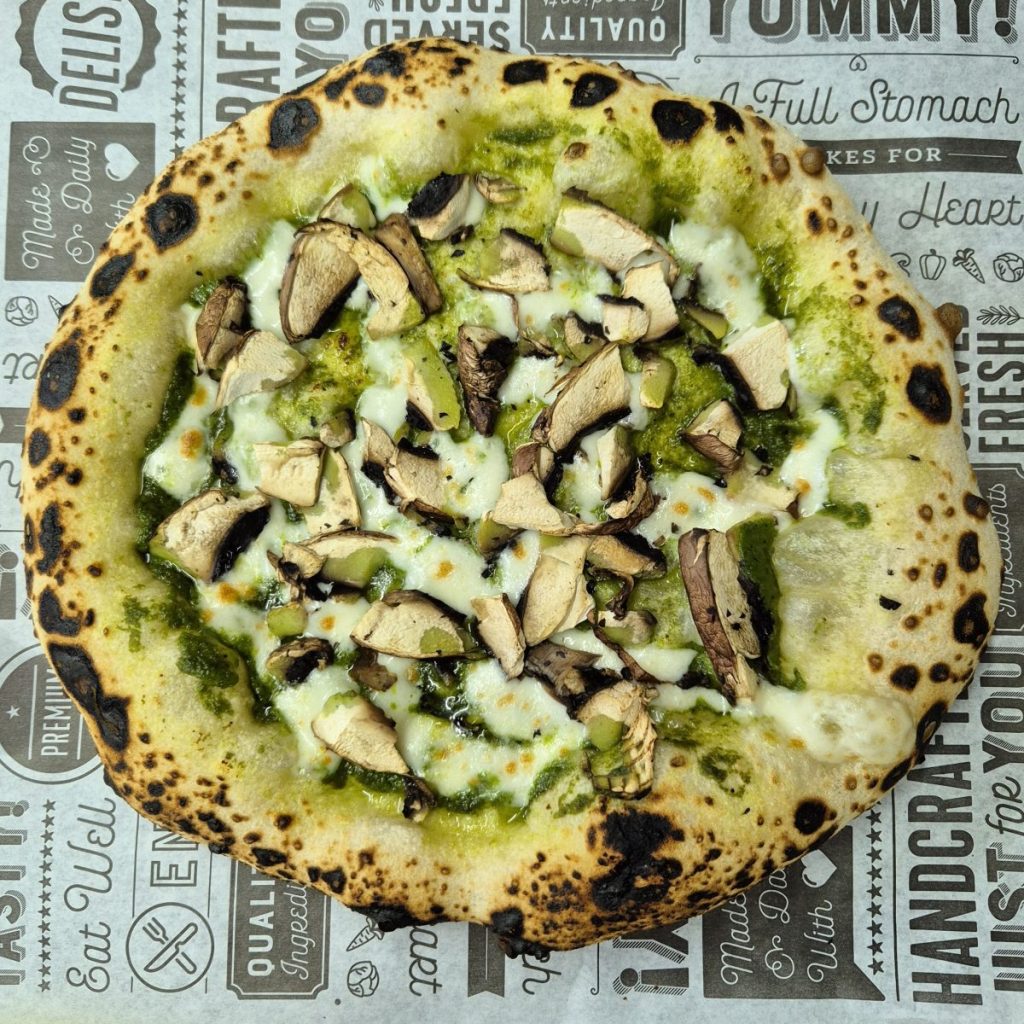
Most pizza dough is made fast.
Ours takes 72 hours.
Not because we love waiting (okay, maybe a little). But because time makes dough taste better, stretch better, and bake better.
What does “72-hour fermentation” mean?
Fermentation is when yeast slowly works through the dough. Over time, it develops:
- More flavor (without needing heavy toppings to hide bland dough)
- Better texture (light, airy crust instead of bready)
- Better bake (good rise + that classic Neapolitan finish)
A 72-hour fermentation simply means we give the dough a long, controlled rest—mostly chilled—so it develops properly instead of being rushed.
Why we do it (the simple version)
1) The crust tastes like something
Long fermentation builds a deeper, more complex flavor. The crust stops being a “base” and starts being part of the experience.
2) Lighter bite, better chew
Time helps the dough hold air better. That’s how you get:
- A puffy, airy rim
- A crust that feels light (not dense)
- A chew that’s satisfying, not tiring
3) Easier to stretch, more consistent to bake
We hand-stretch every pizza. Well-fermented dough is smoother to work with and bakes more predictably—especially for Neapolitan-style pizza.
4) Leopard spotting (yes, it matters)
Those little charred spots on the crust aren’t just for looks. When fermentation is right, the dough bakes in a way that gives you:
- Leopard spotting
- Light crispness on the outside
- Soft, airy interior
Why we ferment cold
Cold fermentation slows everything down. That gives us more control and keeps quality consistent day after day.
In other words: less guesswork, more “wow, this crust is good.”
What you’ll notice when you eat it
People usually say:
- “The crust is so light.”
- “Even the crust is good.”
- “It doesn’t feel jelak.”
That’s exactly what we’re aiming for.
One-line explanation (for anyone who asks)
We use a 72-hour fermented dough and premium ingredients, and we bake every pizza to order—so you’re paying for the process and quality, not just the size.
Hungry now?
 ThatsMyPizza SG
Leave a comment